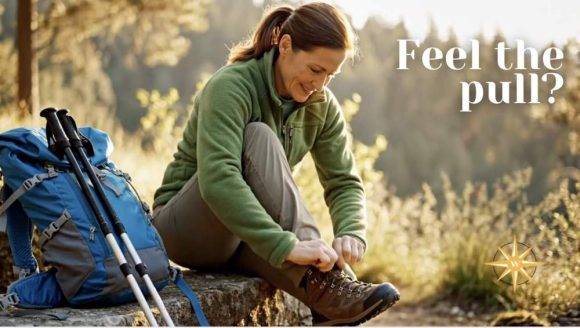
By midlife, most of us have learned to keep up. With the diary. With the demands. With everyone else’s pace. And then one day — kettle boiled, calendar full, feeling oddly empty, you notice a pull towards something that reminds you you’re alive. It becomes a pair of boots by the door. It becomes a trail.
And almost immediately, the second voice pipes up:
But what if I can’t keep up?
It’s the quiet worry behind so many “maybe next years.” So here’s what we believe at WalkingWomen, and what we build our Treks around:
A trek doesn’t have to feel like a test. It can be steady, supported, and human.
Not because it’s easy. Because it’s true.
The first ten minutes: where most fears live
If you’ve ever joined a group walk and felt your chest tighten as everyone sets off, you’ll know this moment. The first ten minutes can feel like the audition. Am I too slow? Are they fitter? Should I push harder?
But a well-led trek doesn’t let that moment run the show. It settles it. The guide watches the group, not the stopwatch. Bodies warm up. Conversations begin. The landscape starts doing what it does best: pulling you out of your head.
That’s the first gift of a human pace. It lowers the volume on fear.
What “human pace” actually means
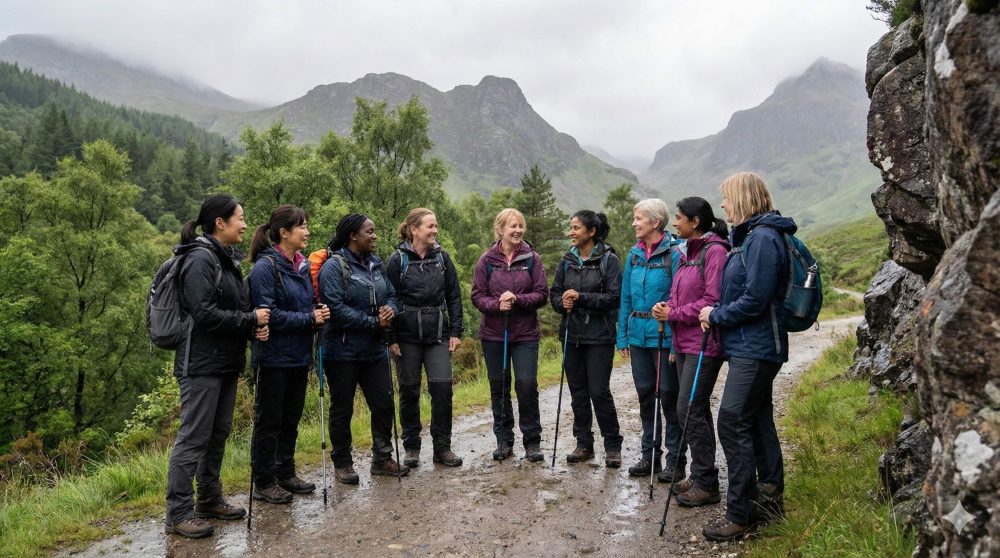
Human pace isn’t a euphemism for slow. It’s a way of walking that respects how bodies and minds work over multiple days — the pace where you can breathe steadily and talk in sentences, where you enjoy the view without guilt, where you finish pleasantly tired rather than flattened. The pace where you wake up the next morning thinking: yes, I can do another day.
The difference between effort and strain
There will be effort on a trek. Hills ask questions. Wind can be rude. Descents make knees complain. But strain — forcing yourself past what’s sensible — isn’t the point. At WalkingWomen, we’re not interested in the “push through” culture that creeps into outdoor spaces. We’re interested in challenge that leaves you feeling stronger, not punished.
The group rhythm: not one speed, but a weave
When people imagine “keeping up”, they picture a single line moving at a single speed. Real groups don’t work like that. Some women stride out on the flat. Some are cautious on rocky ground. Some chatter up hills. Some go quiet and focus. The guide holds the whole pattern together — so no one feels measured. And the group learns quickly: there isn’t one right pace. There’s the pace that works today, for this terrain, for these bodies.
That is human.
Pauses aren’t failure. They’re the architecture.
The ordinary, strategic, sensible pause — to drink, to add a layer, to properly let a view land — transforms a long walk from an endurance slog into a day with shape and softness. These pauses protect joints, steady energy, and give women permission to be fully present. They also create the best moments.
Often, it’s in a pause that someone says quietly: “I didn’t think I could do this.”
And someone else replies, just as quietly: “Look at you.”
“But what if I’m the slowest?”
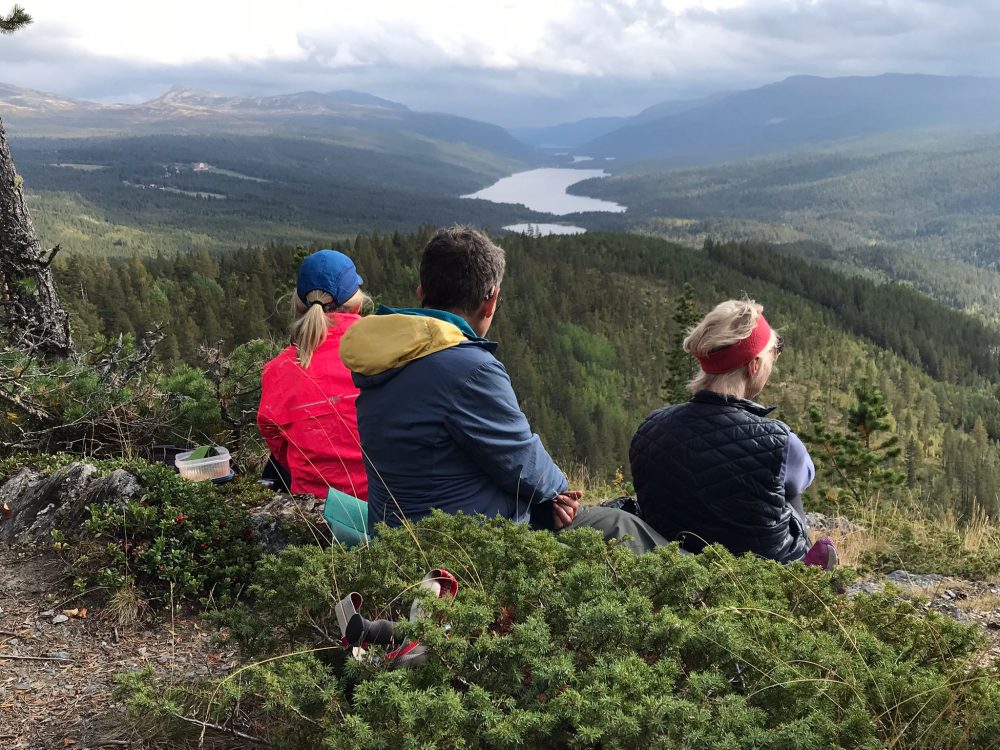
If you’re worried about that, there’s a good chance you’ve spent years being the one who copes — keeping up even when tired, not wanting to be a nuisance, pushing through things that would have been easier if you’d let yourself be supported. A human pace offers something different. It lets you practise being looked after. Not in a childish way. In a grown-up way that says: my comfort matters too.
That’s surprisingly emotional for many women. Because being supported isn’t a small thing. It’s a rare thing.
The guide makes the difference
Good guiding is a craft — it’s atmosphere, judgement, and reading a group. It’s knowing when to slow down, when to pause, and when to simply let people walk in their own quiet. It’s also the small, practical steadiness that keeps you safe:
“We’ll take this bit slowly — it’s rocky.”
“Pop a layer on — you’ll cool down quickly.”
“You’re doing brilliantly.”
Those small words prevent a wobble becoming a spiral. They build confidence that outlasts the trip.
A human pace isn’t just a speed. It’s a culture.
The body truth: multi-day walking is different
A day walk is one thing. Multi-day walking is another. The trick isn’t to smash day one — it’s to finish day one with enough in the tank for day two. Real bodies, especially bodies in midlife and beyond, do better with steadiness than heroics. There’s a sweet spot where you feel the stretch but not the strain, where you go to bed tired and wake up with that quiet, surprising thought:
I’m stronger than I remembered.
The emotional shift: from “keeping up” to “being in”
Something changes when you stop walking for performance and start walking for experience. You notice the smell of damp earth after rain. The way cloud moves across a ridge. The small conversation that makes you laugh unexpectedly. You stop scanning for judgement. You start enjoying your own company, and the company around you.
And then, without fanfare, you realise the biggest thing a human pace offers:
It gives you your own pace back. Not the pace the world demands. The pace you can live in.
A human pace still asks you to prepare
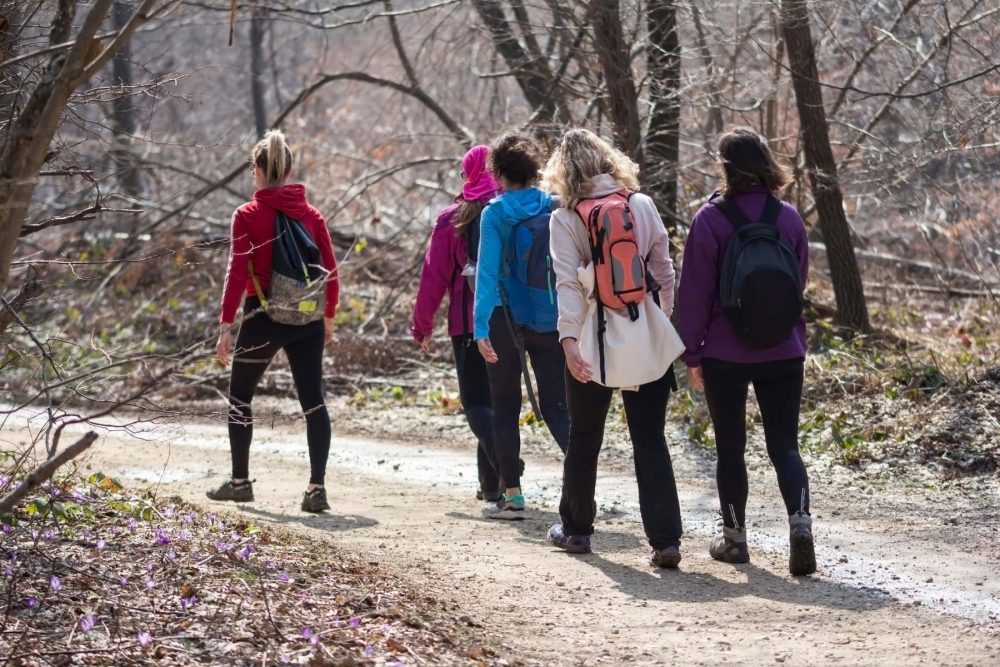
Supportive, yes — but still real walking. A good starting point is being able to walk for 60–90 minutes comfortably, a willingness to build steadily over a few weeks, and being open to poles on descents. Not there yet? That’s not a no. It’s a starting point.
Start where you are. Build gently. Keep going.
The quiet pride at the end of a day
It’s not the fist pump at the summit. It’s sitting down, taking your boots off, and thinking: I did that. Not because you proved something to anyone else. Because you proved something to yourself — in the kindest possible way.
Ready to explore?
If you’re not sure where to start, our gentle training guide Dodgy Knees, Big Dreams is written for real bodies and real lives. Or simply drop us a message and tell us where you’re starting from. We’ll give you an honest steer — warm, realistic, and completely pressure-free.
These Treks are a lovely place to begin exploring:
- Cornwall Coast Path (May 8) — big coastal days with recovery built in
- West Island Way, Isle of Bute (May 30) — a gentler island trek with sweeping sea views
- Kerry Camino, Ireland (July 11) — meaningful miles with a steady, supportive rhythm
- King Charles III Coast Path, Cumbria (July 4) — classic coast walking with a spa finish
This post is part of our Walking Onwards series — practical, reassuring reads for women in midlife who feel the pull towards a meaningful challenge – read more

