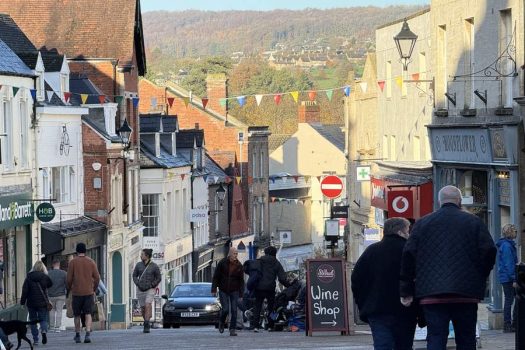
A town in the Five Valleys with mill history, a creative pulse, and walking that feels gloriously lived-in.
Stroud is having a moment — and it isn’t because it’s trying to be the Cotswolds of postcards and honey-stone perfection.
In a recent Observer piece, Stroud is described as sitting in the nucleus of Gloucestershire’s Five Valleys and “technically” within the Cotswolds — but in practice resisting almost everything that label implies. Locals half-jokingly badge this outlook with “Stroud and Proud” and “Keep Stroud Weird”.
That “weird” isn’t a marketing slogan. It’s a way of doing things: independent, creative, community-minded, and grounded in a working history that still shows through the landscape. As one local voice in the Observer feature puts it, this place was built on an industrial heritage of wool, scarlet dye and water-powered mills — a major centre before coal and steam.
And once you’ve walked here, you start to understand why Stroud inspires such loyalty. The countryside is properly beautiful, yes — but it isn’t manicured for an audience. The walking feels real: valley paths and ridge-top views, old mill buildings tucked into folds of land, and then, back in town, a food-and-arts scene that makes you want to linger.
A Cotswolds town that doesn’t do “corduroy small talk”
What makes Stroud such a compelling base is that it doesn’t feel like a place you “do” and move on from. It’s a market town with its own rhythm, and the Observer feature captures that sense of personality: less honey-stone glow, less performance — more sleeves-rolled-up community life.
You feel it on an ordinary morning: people popping in for bread, friends meeting without fuss, walkers coming through with rosy cheeks and muddy hems. There’s a gentle confidence to the town — the feeling that it’s evolving on its own terms, in its own time.
And crucially, it’s a place that rewards slowing down. Not “slow travel” in a lofty, aspirational sense — slow in the most practical way: time to walk properly, time to eat well, time to sit and talk without clock-watching.
The Five Valleys: where the landscape does the storytelling
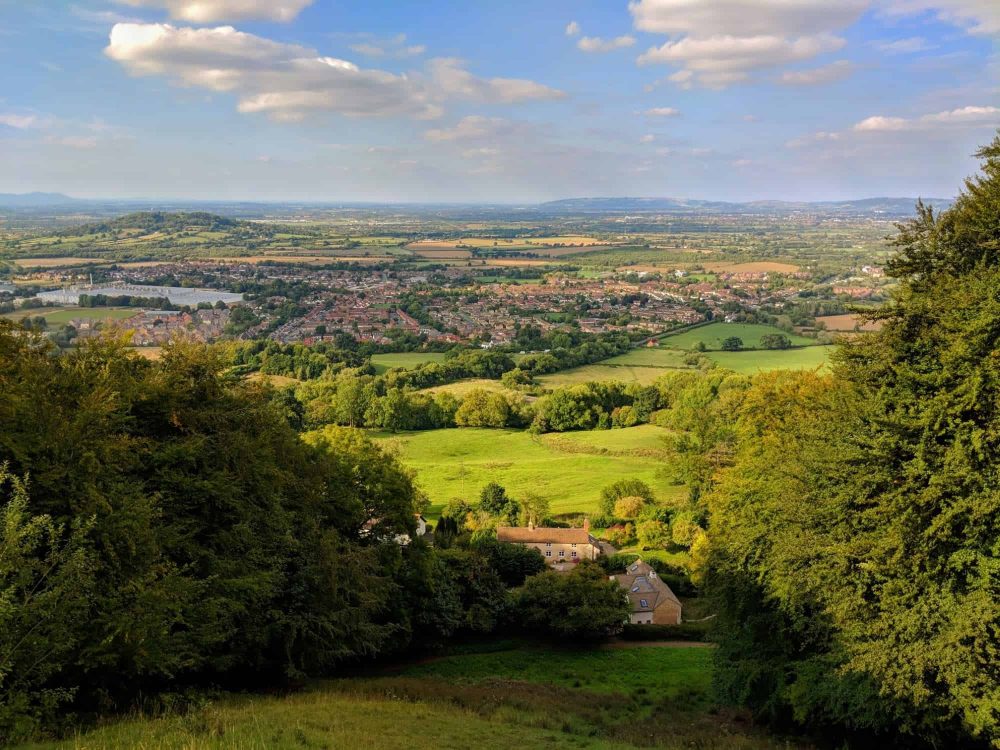
Stroud sits in a bowl of green folds — the Five Valleys — and walking here has a very satisfying, very human rhythm. You tend to begin sheltered: a valley path with the sound of water nearby, trees filtering the light, birdsong doing its best to drown out your thoughts.
Then the ground begins to lift. Not dramatically, not in a punishing way, but enough to warm your legs and clear your head. You come up onto a ridge and the views open: fields, woodland, the town tucked below, and that sense that you’ve arrived somewhere — not by driving to a viewpoint car park, but by earning it in small, steady steps.
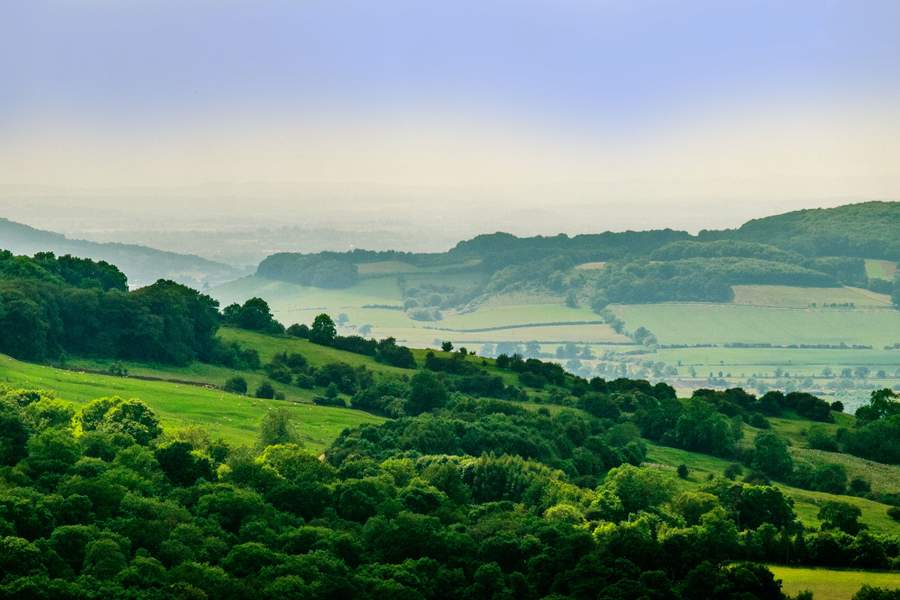
The best walks here feel varied without being fussy: valley to ridge, ridge back to valley. Every time you think you’ve got the measure of the place, it changes its mind — woodland becomes open sky, an old stone wall appears, a tucked-away building hints at the area’s working past.
It’s the kind of countryside that doesn’t shout for attention. It invites you in, and then quietly keeps you there.
Wool, water, and the “soul” of a place
One reason Stroud feels different from the traditional Cotswolds circuit is that it has a story in its bones.
The Observer article describes that industrial backbone clearly — wool, scarlet dye, water-powered mills — and you can sense it as you walk. The valleys make more sense when you remember the water wasn’t just scenic; it was functional. Routes follow practical lines. Buildings sit where they needed to sit. The landscape has been worked, not just admired.
That heritage might sound “historical”, but in Stroud it feels current — because the town’s modern energy is still rooted in making, doing, building, and feeding people well.
The Stroud version of culture: bread, markets, and places you actually gather
If you want to understand why Stroud is quietly magnetic, don’t start with a “top 10 attractions” list. Start with where people gather.
The Observer piece is full of these community anchors: institutions that shape the town’s social life. It highlights the weekly farmers’ market as a local hero — and it’s exactly the kind of thing that makes Stroud feel lived-in rather than visitor-led.
Then there are the places built around conversation. One bakery mentioned in the feature describes bread as a conversation starter, with shared tables arranged to encourage chat — an idea that feels very Stroud: food and culture as inseparable, and community as something you make through small daily rituals.
Even if you never set foot in the specific venues, the point lands: Stroud isn’t “pretty”. It’s sociable. It’s the sort of place where you walk all day and still have an evening — not just a tired collapse.
An insider note from nearby (and a very important cake rule)
A local guide we love, Susie Amann, has lived in Nailsworth for over 20 years — just a few miles from Stroud — and she’s the kind of person who genuinely walks from her doorstep. But if you’re basing yourself in Stroud, that’s where she’ll anchor you: into the Five Valleys landscape and the town’s particular brand of energy.
Susie’s take is simple:
you don’t need to chase the “big-name” villages to get the best of the Cotswolds. If you want texture, walk the valleys and finish in a town where you can eat well and linger.
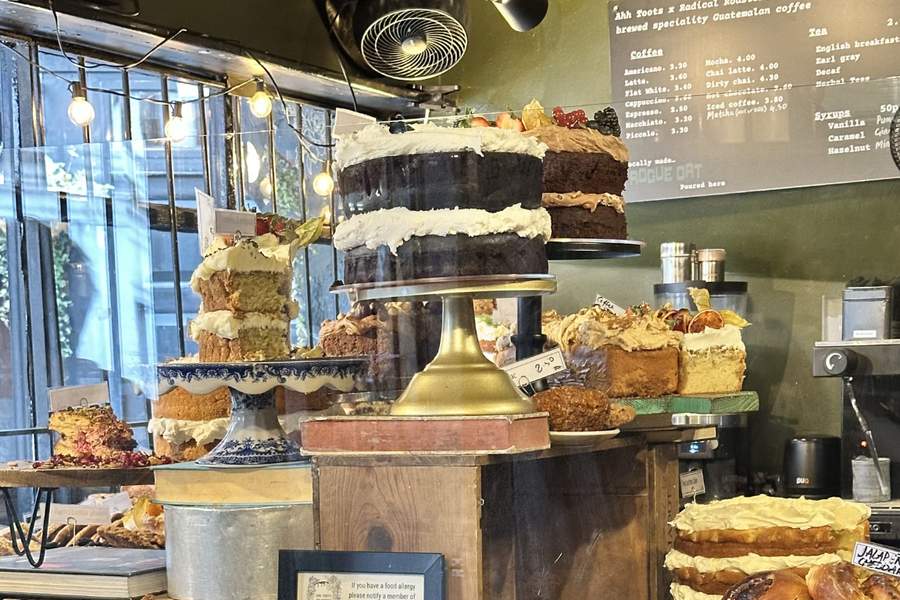
And Susie has one non-negotiable walking principle: a proper day on foot should include a proper cake stop.
Not as a gimmick. As a philosophy.
Because the pause is part of the pleasure. It’s where you notice you’ve exhaled. It’s where stories get swapped. It’s where a walk becomes a day out rather than a workout. (And in Stroud, taking food seriously feels less like indulgence and more like local etiquette.)
Three “do this” moments for a Stroud walking day
If you’re planning a visit — whether for a day, a weekend, or the sort of stay that turns into “we should come back here” — build your time around moments rather than checklists.
- Start with something made well – Coffee somewhere independent. Bread that smells like it was baked by someone who cares. Stroud has a knack for turning simple things into small pleasures — and it sets the tone for the day.
- Walk a valley-to-ridge loop for the “earned view” feeling – Choose a route that gives you both: the shelter of the valley and the lift of the ridge. That contrast is the secret sauce of the Five Valleys. You get calm and perspective in one walk.
- Finish with food and a place you can stay awhile – Stroud shines after the walk: markets, pubs, bakeries, small restaurants, and the general sense that the day doesn’t have to end just because the walking has. The Observer feature describes community spaces as the town’s “social arteries”, and you feel that when you sit down, the conversation naturally carries on.
Why this corner of the Cotswolds stays with you
Some places are beautiful, but you don’t need to return — you’ve “done” them.
Stroud is different. It has that rare combination of landscape and life: proper countryside walking in the Five Valleys, with a town at the centre that feels creative, grounded, and human. The countryside doesn’t feel curated; the town doesn’t feel like it exists for visitors. And together, they create a kind of restorative weekend (or week) that doesn’t ask you to perform any version of yourself.
In a place shaped by mills, markets and a slightly magical streak, Stroud’s soul still lives in its community spaces: sleeves rolled up, quietly getting on with it.
And that’s exactly why it’s worth walking.
A quiet sign-off
If reading this has you thinking, I’d love to experience this patch of the Cotswolds with a small group of women — walking the valleys by day and enjoying Stroud’s food-and-arts energy by evening — our September holiday is here:

